 Image 1 of 4
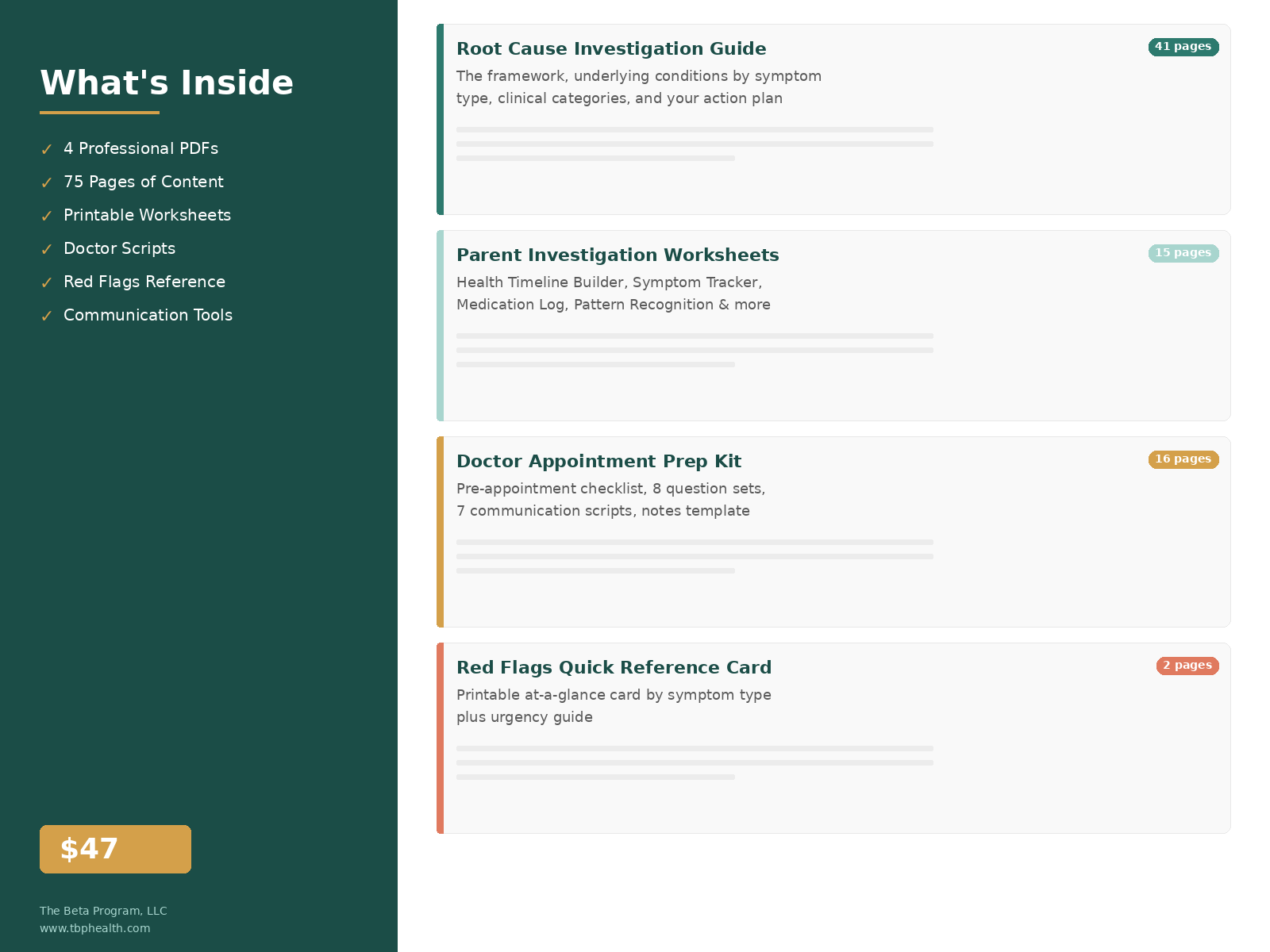 Image 2 of 4
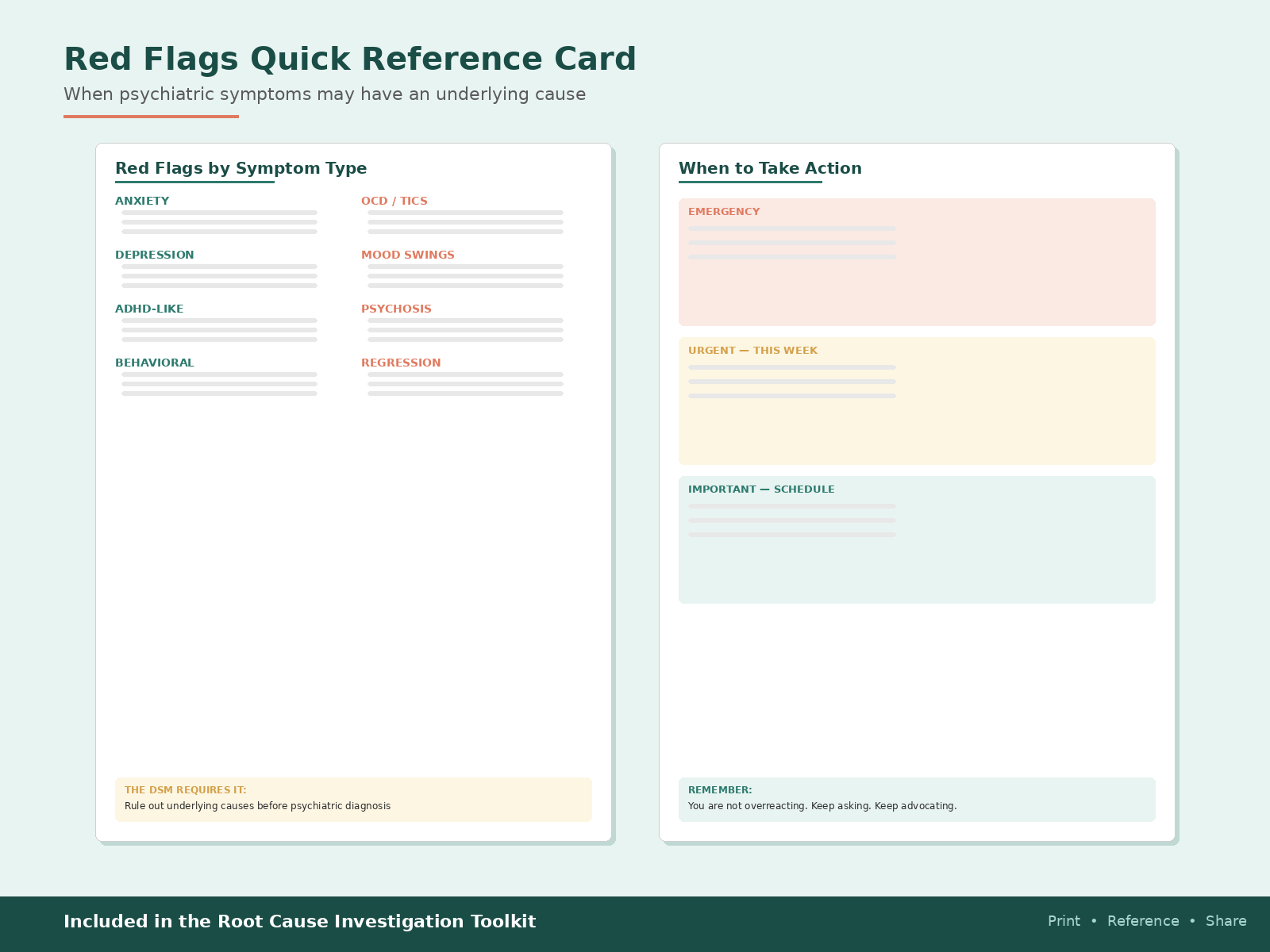 Image 3 of 4
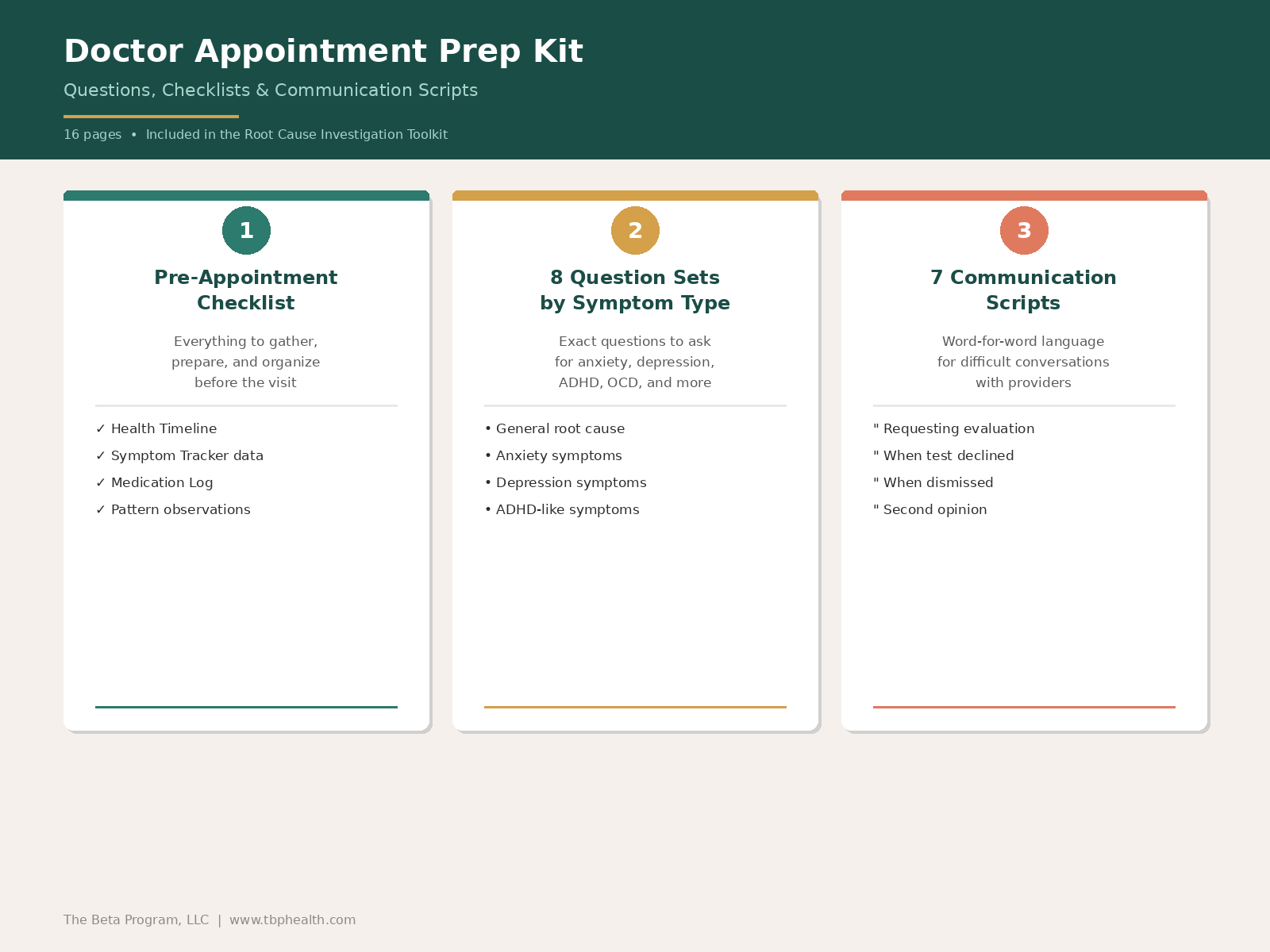 Image 4 of 4
The Root Cause Investigation Toolkit for Parents
75-page toolkit helps parents investigate underlying causes of psychiatric symptoms in children. Worksheets, doctor scripts, and evidence-based guidance.
What if your child's diagnosis is incomplete?
Before you accept "it's just anxiety" or "it's just ADHD" — make sure the evaluation has been thorough.
The Root Cause Investigation Toolkit is a complete system for parents who want to make sure no stone is left unturned in their child's care. It teaches you to observe, document, and ask the right questions — so that the professionals on your team can look in the right places.
[THE PROBLEM]
Here's what most parents are never told:
Psychiatric symptoms — anxiety, depression, ADHD, OCD, mood swings, psychosis, behavioral changes — can be caused by underlying conditions that have nothing to do with a primary mental illness.
A thyroid disorder can look like depression. A vitamin deficiency can cause panic attacks. A strep infection can trigger overnight OCD. Sleep apnea can mimic ADHD. Autoimmune encephalitis can be mistaken for schizophrenia.
Diagnostic criteria require ruling out underlying causes first. But in practice, this step is often skipped — especially in children.
This toolkit changes that.
[WHAT'S INSIDE]
PDF 1: The Root Cause Investigation Guide (41 pages)
Your comprehensive education on how underlying conditions hide behind psychiatric labels. Organized two ways:
By what you're seeing: Anxiety, depression, ADHD, OCD/tics, mood swings, psychosis, behavioral changes, regression — what underlying causes to consider for each
By clinical category: Autoimmune, metabolic, endocrine, infectious, neurological, environmental, medication-related, gut-brain
Your action plan: The 5-step investigation process, how to build a health timeline, how to talk to doctors, when to seek a second opinion, specialist directory
PDF 2: Parent Investigation Worksheets (15 pages, printable)
Health Timeline Builder — the most powerful document you'll create
Weekly Symptom & Behavior Tracker — daily tracking of symptoms, sleep, diet, medications, and context
Medication & Supplement Log — current and discontinued, with side effects
Environmental & Dietary Observation Log — food and environment tracking
Health History Organizer — comprehensive record for new providers
Pattern Recognition Worksheet — turn weeks of tracking into insights
PDF 3: Doctor Appointment Prep Kit (16 pages)
Pre-appointment checklist
8 question sets organized by symptom type (anxiety, depression, ADHD, OCD/tics, mood swings, psychosis, regression, and general root cause questions)
7 communication scripts for difficult conversations (requesting workups, handling dismissal, seeking second opinions, insurance appeals, school communication)
Appointment notes template
PDF 4: Red Flags Quick Reference Card (3 pages, printable)
At-a-glance reference: when each psychiatric symptom may have an underlying cause
"When to Take Action" urgency guide: emergency vs. urgent vs. important
What to bring to every appointment checklist
[WHO THIS IS FOR]
Parents whose child has been diagnosed with a psychiatric condition and want to make sure underlying causes have been thoroughly investigated
Parents whose child's treatment isn't working as expected
Parents who noticed their child's symptoms started suddenly, after an illness, or after a medication change
Parents who feel something doesn't add up but don't know what to ask
Parents navigating the gap between psychiatry and pediatrics
Caregivers advocating for a child in the mental health system
[WHO THIS IS NOT FOR]
This toolkit does not teach you to diagnose conditions or read lab results
It does not replace professional psychiatric or clinical care
[FAQ]
Is this anti-psychiatry? No. This toolkit advocates for the standard of care in medicine: investigate underlying causes alongside psychiatric treatment. Many children benefit from both. The root cause approach and psychiatric care work best together.
Do I need a clinical background to use this? Not at all. Everything is written in plain language. The worksheets guide you step-by-step, and the question sets give you exact language to use with your child's doctor.
Will my doctor take this seriously? The communication scripts are specifically designed to be collaborative and evidence-based. You'll present organized data and specific questions — not internet theories. Most doctors respond well to parents who come prepared.
What if we've already done some testing? The Health History Organizer helps you catalog what's been done, and the Pattern Recognition Worksheet helps you identify what might be worth investigating next.
Can I print the worksheets? Yes. All worksheets are designed to be printed. We recommend printing multiple copies of the weekly tracker.
Is this a subscription? No. One payment, lifetime access to all 4 PDFs.
$47 | Instant Download | 4 Professional PDFs | 75 Pages
[Get the Toolkit] [See What's Inside ↓]
This guide is for educational purposes only and does not constitute clinical advice, diagnosis, or
treatment. The information provided is designed to help parents and caregivers understand that
mental health symptoms can sometimes have underlying causes, and to empower them to have informed
conversations with their child's healthcare team.
This toolkit does not replace professional clinical evaluation. It does not teach you to read laboratory
results, perform comprehensive assessments, or diagnose conditions. Its purpose is to help you observe,
document, and ask better questions — so that no stone is left unturned in your child's care.
Always consult qualified healthcare providers before making any changes to your child's treatment plan. If
your child is experiencing a mental health or physical emergency, call 911 or go to your nearest emergency
department immediately.
75-page toolkit helps parents investigate underlying causes of psychiatric symptoms in children. Worksheets, doctor scripts, and evidence-based guidance.
What if your child's diagnosis is incomplete?
Before you accept "it's just anxiety" or "it's just ADHD" — make sure the evaluation has been thorough.
The Root Cause Investigation Toolkit is a complete system for parents who want to make sure no stone is left unturned in their child's care. It teaches you to observe, document, and ask the right questions — so that the professionals on your team can look in the right places.
[THE PROBLEM]
Here's what most parents are never told:
Psychiatric symptoms — anxiety, depression, ADHD, OCD, mood swings, psychosis, behavioral changes — can be caused by underlying conditions that have nothing to do with a primary mental illness.
A thyroid disorder can look like depression. A vitamin deficiency can cause panic attacks. A strep infection can trigger overnight OCD. Sleep apnea can mimic ADHD. Autoimmune encephalitis can be mistaken for schizophrenia.
Diagnostic criteria require ruling out underlying causes first. But in practice, this step is often skipped — especially in children.
This toolkit changes that.
[WHAT'S INSIDE]
PDF 1: The Root Cause Investigation Guide (41 pages)
Your comprehensive education on how underlying conditions hide behind psychiatric labels. Organized two ways:
By what you're seeing: Anxiety, depression, ADHD, OCD/tics, mood swings, psychosis, behavioral changes, regression — what underlying causes to consider for each
By clinical category: Autoimmune, metabolic, endocrine, infectious, neurological, environmental, medication-related, gut-brain
Your action plan: The 5-step investigation process, how to build a health timeline, how to talk to doctors, when to seek a second opinion, specialist directory
PDF 2: Parent Investigation Worksheets (15 pages, printable)
Health Timeline Builder — the most powerful document you'll create
Weekly Symptom & Behavior Tracker — daily tracking of symptoms, sleep, diet, medications, and context
Medication & Supplement Log — current and discontinued, with side effects
Environmental & Dietary Observation Log — food and environment tracking
Health History Organizer — comprehensive record for new providers
Pattern Recognition Worksheet — turn weeks of tracking into insights
PDF 3: Doctor Appointment Prep Kit (16 pages)
Pre-appointment checklist
8 question sets organized by symptom type (anxiety, depression, ADHD, OCD/tics, mood swings, psychosis, regression, and general root cause questions)
7 communication scripts for difficult conversations (requesting workups, handling dismissal, seeking second opinions, insurance appeals, school communication)
Appointment notes template
PDF 4: Red Flags Quick Reference Card (3 pages, printable)
At-a-glance reference: when each psychiatric symptom may have an underlying cause
"When to Take Action" urgency guide: emergency vs. urgent vs. important
What to bring to every appointment checklist
[WHO THIS IS FOR]
Parents whose child has been diagnosed with a psychiatric condition and want to make sure underlying causes have been thoroughly investigated
Parents whose child's treatment isn't working as expected
Parents who noticed their child's symptoms started suddenly, after an illness, or after a medication change
Parents who feel something doesn't add up but don't know what to ask
Parents navigating the gap between psychiatry and pediatrics
Caregivers advocating for a child in the mental health system
[WHO THIS IS NOT FOR]
This toolkit does not teach you to diagnose conditions or read lab results
It does not replace professional psychiatric or clinical care
[FAQ]
Is this anti-psychiatry? No. This toolkit advocates for the standard of care in medicine: investigate underlying causes alongside psychiatric treatment. Many children benefit from both. The root cause approach and psychiatric care work best together.
Do I need a clinical background to use this? Not at all. Everything is written in plain language. The worksheets guide you step-by-step, and the question sets give you exact language to use with your child's doctor.
Will my doctor take this seriously? The communication scripts are specifically designed to be collaborative and evidence-based. You'll present organized data and specific questions — not internet theories. Most doctors respond well to parents who come prepared.
What if we've already done some testing? The Health History Organizer helps you catalog what's been done, and the Pattern Recognition Worksheet helps you identify what might be worth investigating next.
Can I print the worksheets? Yes. All worksheets are designed to be printed. We recommend printing multiple copies of the weekly tracker.
Is this a subscription? No. One payment, lifetime access to all 4 PDFs.
$47 | Instant Download | 4 Professional PDFs | 75 Pages
[Get the Toolkit] [See What's Inside ↓]
This guide is for educational purposes only and does not constitute clinical advice, diagnosis, or
treatment. The information provided is designed to help parents and caregivers understand that
mental health symptoms can sometimes have underlying causes, and to empower them to have informed
conversations with their child's healthcare team.
This toolkit does not replace professional clinical evaluation. It does not teach you to read laboratory
results, perform comprehensive assessments, or diagnose conditions. Its purpose is to help you observe,
document, and ask better questions — so that no stone is left unturned in your child's care.
Always consult qualified healthcare providers before making any changes to your child's treatment plan. If
your child is experiencing a mental health or physical emergency, call 911 or go to your nearest emergency
department immediately.